The Job and What's Involved
Foundries produce metal castings for a wide range of products and industries. These include cars, fridges and mobile phones, as well as items for the medical, aerospace and information, communications and technology (ICT), industries. Foundry process operators fill a range of jobs within foundries to help produce castings, including:
Sand Mill Operator - running the sand-mixing machinery to produce the mixtures used by moulders.
Melter - also known as a cupola attendant, operating the furnaces where the metal is melted.
Caster - transporting the molten metal from the furnace and pouring it into moulds.
Machine Moulder/Moulding Machine Operator - working the sand-moulding machines, either in a team on a large machine or alone on individual machines.
Die Caster - maintaining and operating die-casting machines.
Shell Moulder/Coremaker - setting and operating the machines that make the shell moulds (moulds formed from a thin layer or shell of special sand).
Wax Assembler - putting together the wax shapes used in 'investment casting', a process used to produce small products, which need to be very accurate.
Ceramic Moulder - dipping the wax pattern assemblies into a ceramic liquid, which forms a mould when it is dry.
Burner/Radiac Operator - or arc air operator, removing surplus metal from the casting with a high-temperature flame, a thin grinding disc and an electric arc.
Fettler/Grinder - grinding surplus metal off castings.
Shot Blaster - operating a shot blasting machine to clean castings.
Slinger or Crane Driver's Mate - fixing loads, and selecting and attaching the right lifting equipment for each job.
Larger, automated foundries are mostly involved in producing large numbers of identical castings. Smaller, jobbing foundries make fewer quantities of castings with a higher proportion of the work completed by hand.
Foundry process operators normally work between 37 and 39 hours a week. This is usually on a shift system, which may include evenings and weekends. Regular overtime may also be available.
Depending on the role, most of the work is carried out in the foundry area, although there may be some outside work such as sorting the metal. Working conditions can be hot and dusty, although fume and dust extractors are installed in most foundries. The job is very physical, although the use of lifting equipment can reduce these demands.
Foundry process operators are expected to wear safety clothing, which may include overalls, safety shoes, hard hats, eye shields, earplugs and gloves.
The starting rate for a foundry process operator is around £12,000 a year. With more experience, process operators may earn about £18,000. The highest salaries may be around £20,000 a year.
Getting Started with this Career Choice
The foundry sector employs around 62,000 employees in 500 companies. Foundries tend to be small scale and almost half employ fewer than 50 people. The main regions for foundry employment are the West Midlands, followed by Yorkshire and Humberside and the East Midlands.
A move towards production in other materials, such as plastic, has created some challenges for the industry. However foundries producing complex or high-value castings for specialist markets, using highly automated, computer-controlled equipment, continue to be successful. In some companies automation has led to the employment of multi-skilled machine operators rather than specialists.
Vacancies may be advertised in the local press and Jobcentre Plus offices. They may also be found on industry websites such as that of the Institute of Cast Metal Engineers (ICME).
Education and Training
Foundry process operators do not need formal qualifications. New entrants join as unskilled foundry operatives and train to become operators. Applicants may have to pass a medical examination.
Young people may also be able to start on an Apprenticeship. Entry requirements are usually set by the recruiting company and do vary. Generally, applicants should have at least three to five GCSE's including English, maths and science. GCSE's in engineering and manufacturing may also be available. The Diplomas in engineering, and manufacturing and product design may be relevant for this area of work and Apprenticeships may be available.
Apprenticeships and Advanced Apprenticeships provide structured training with an employer. As an apprentice you must be paid at least £95 per week; you may well be paid more. A recent survey found that the average wage for apprentices was £170 a week. Your pay will depend on the sector in which you work, your age, the area where you live and the stage at which you have arrived in the Apprenticeship.
Entry to Employment (e2e) can help to prepare those who are not yet ready for an Apprenticeship. In addition, Young Apprenticeships may be available for 14- to 16-year-olds. More information is available from a Connexions personal adviser or at www.apprenticeships.org.uk.
There are different arrangements for Apprenticeships in Scotland, Wales and Northern Ireland.
For further information visit My World of Work www.myworldofwork.co.uk/modernapprenticeships, Careers Wales www.careerswales.com; and for Northern Ireland contact www.careersserviceni.com.
Useful pre-entry qualifications include the BTEC National Diploma/Certificate in manufacturing engineering.
A Few More Exams You Might Need
New workers usually receive induction training covering basic work practices, and health and safety issues. This is normally followed by on-the-job training, which varies depending on the complexity of the work. It may also be possible to do a range of specialist short courses.
All Apprenticeships involve work-based training combined with block or day release for college courses. Apprentices usually work towards NVQ's and, in some cases, BTEC National and Higher National Awards and City & Guilds qualifications.
Relevant qualifications include:
- NVQ Levels 1 and 2 in performing manufacturing operations.
- NVQ Level 2 in performing engineering operations.
- NVQ Levels 2 and 3 in materials processing and finishing, or metal processing and allied operations.
- NVQ Level 3 in engineering woodworking, pattern and model making.
The following colleges offer courses that are directly relevant to the castings industry.
Bradford College - foundation degree in metallurgy and materials.
Chesterfield College - Edexcel/BTEC National Certificate in manufacturing engineering.
Rotherham College of Arts & Technology - National and Higher National Certificate in manufacturing engineering and National Certificate in materials technology.
Sandwell College - BTEC National Award - advanced manufacturing engineering.
The Institute of Cast Metals Engineers (ICME) runs a wide programme of short courses in many aspects of metallurgy, casting and foundry operations. Courses generally run for one to five days. Details of these courses, as well as the colleges mentioned above, are available on their website.
Featured Job Guide - Oil Drilling Roustabout
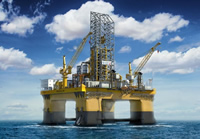
Oil Drilling Roustabouts and Roughnecks work as part of a small team on offshore oil or gas drilling rigs or production platforms. Roustabouts do unskilled manual labouring jobs on rigs and platforms, and Roughneck is a promotion from roustabout.
Roustabouts do basic tasks to help keep the rig and platform working efficiently and Roughnecks do practical tasks involved in the drilling operation, under the supervision of the driller.
________________________________________________________________________________
Skills and Personal Qualities Needed
Foundry process operators need to:
- Be good with their hands.
- Have good hand-to-eye co-ordination.
- Be accurate and careful in their work.
- Have a good level of physical fitness.
- Work well as part of a team and under supervision.
- Have a responsible attitude.
- Be aware of health and safety issues.
- Have good communication skills.
Your Long Term Prospects
Opportunities exist for foundry process operators to move on to more specialist work as patternmakers or moulders/coremakers.
With training and experience, there may be the option of progressing into supervisory or managerial roles. They may also be able to move into quality control or maintenance work.
There may be opportunities to work in foundries abroad.
Get Further Information
Castings Technology International,
Advanced Manufacturing Park,
Brunel Way, Rotherham S60 5WG
Tel: 0114 254 1144
Website: www.castingstechnology.com
Engineering Connections - EEF West Midlands,
Reddings Lane, Tyseley, Birmingham,
West Midlands
Tel: 0121 7071414, Freephone 0800 917 1617
Website: www.apprentices.co.uk
Institute of Cast Metals Engineers (ICME),
47 Birmingham Road, West Bromwich,
West Midlands B70 6PY
Tel: 0121 601 6979
Website: www.icme.org.uk
SEMTA (Science, Engineering
and Manufacturing Technologies Alliance),
14 Upton Road, Watford, Hertfordshire WD18 0JT
Tel: 01923 238441
Website: www.semta.org.uk
Other Related Jobs
- Blacksmith
- Engineering Operative
- Foundry Moulder/Coremaker
- Foundry Patternmaker
- Heat Treatment Operator
- Mechanical Engineering Technician
- Metals Industry Production Operative
- Plastics Process Operative
Additional resources
Additional resources for job seekers and those already in a job.
Advice on dealing with student debt
A guide to preparing the perfect CV
How to Write a Job Application Letter
Get Help with Workplace Bullying
How to Balance Self-Care with Your Remote Side Job
How to enjoy being at the office
How to Write a Job Application Letter
How to Set Yourself Up for a Successful Remote Work Career
The 7 Best Tips for First-Time Job Seekers
The Key to Successful Job Interviews
Titanic - Lifelong lessons it taught us all!
Remote Job Interviews: How to Find Your Dream Job
Use the Internet to further your career
Some Great Job Opportunities for Young Adults